GPTZero Review
GPTZero review for educators, publishers, recruiters, and teams comparing AI detection, writing reports, pricing, and false-positive risk.
Strong fit for structured AI-content review workflows, as long as users treat results as evidence for discussion rather than final proof.
Use it if…
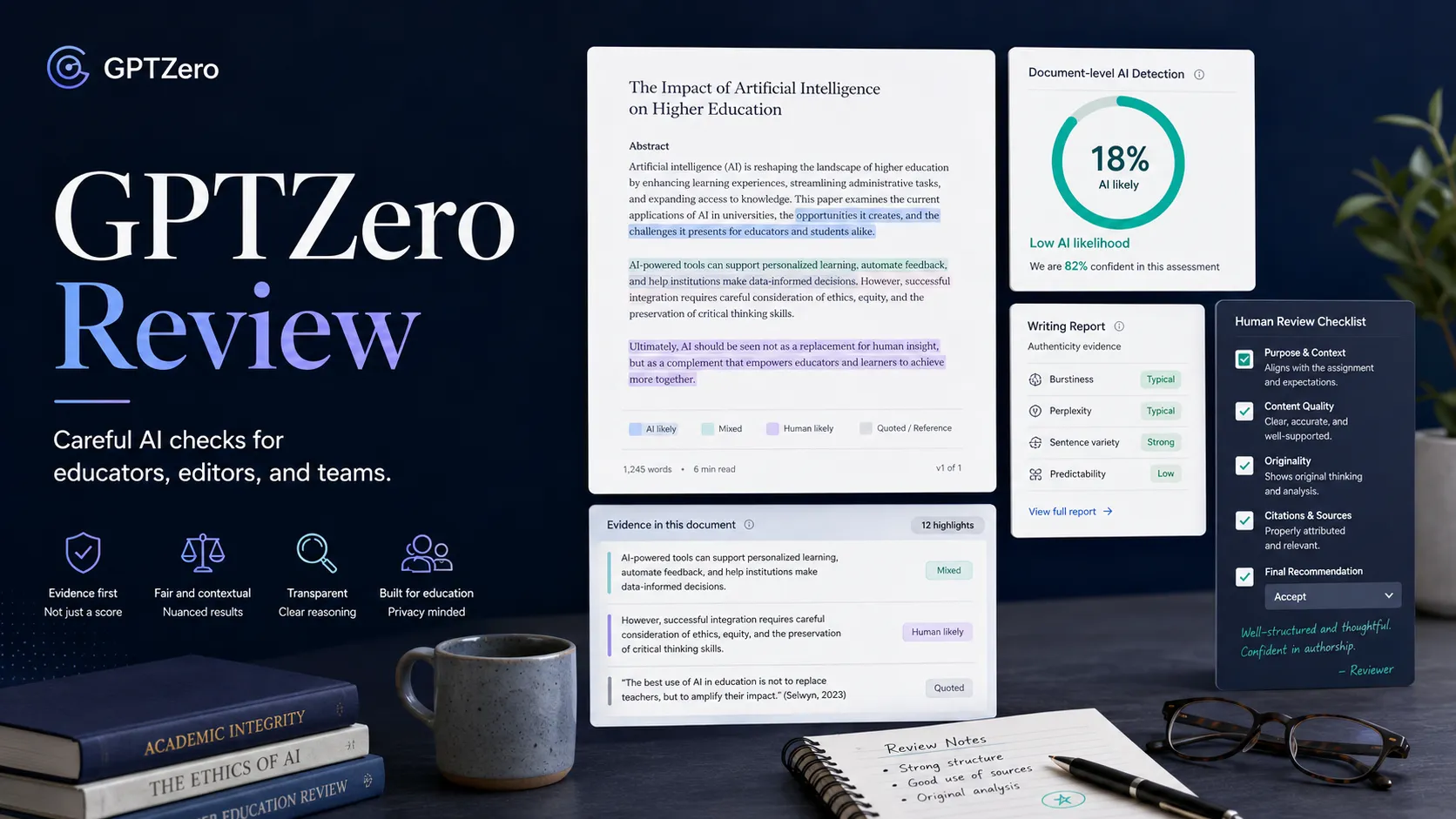
- ✓ You need a repeatable way to review text for likely AI involvement before making editorial, classroom, or hiring decisions.
- ✓ You want sentence-level context, mixed-document signals, and writing evidence rather than a single shallow score.
- ✓ Your workflow benefits from Chrome, Google Docs, Canvas, Zapier, or API access.
- ✓ You are willing to pair detector results with a clear human review process.
Skip it if…
- – You want a detector to make final disciplinary, hiring, or editorial decisions without human review.
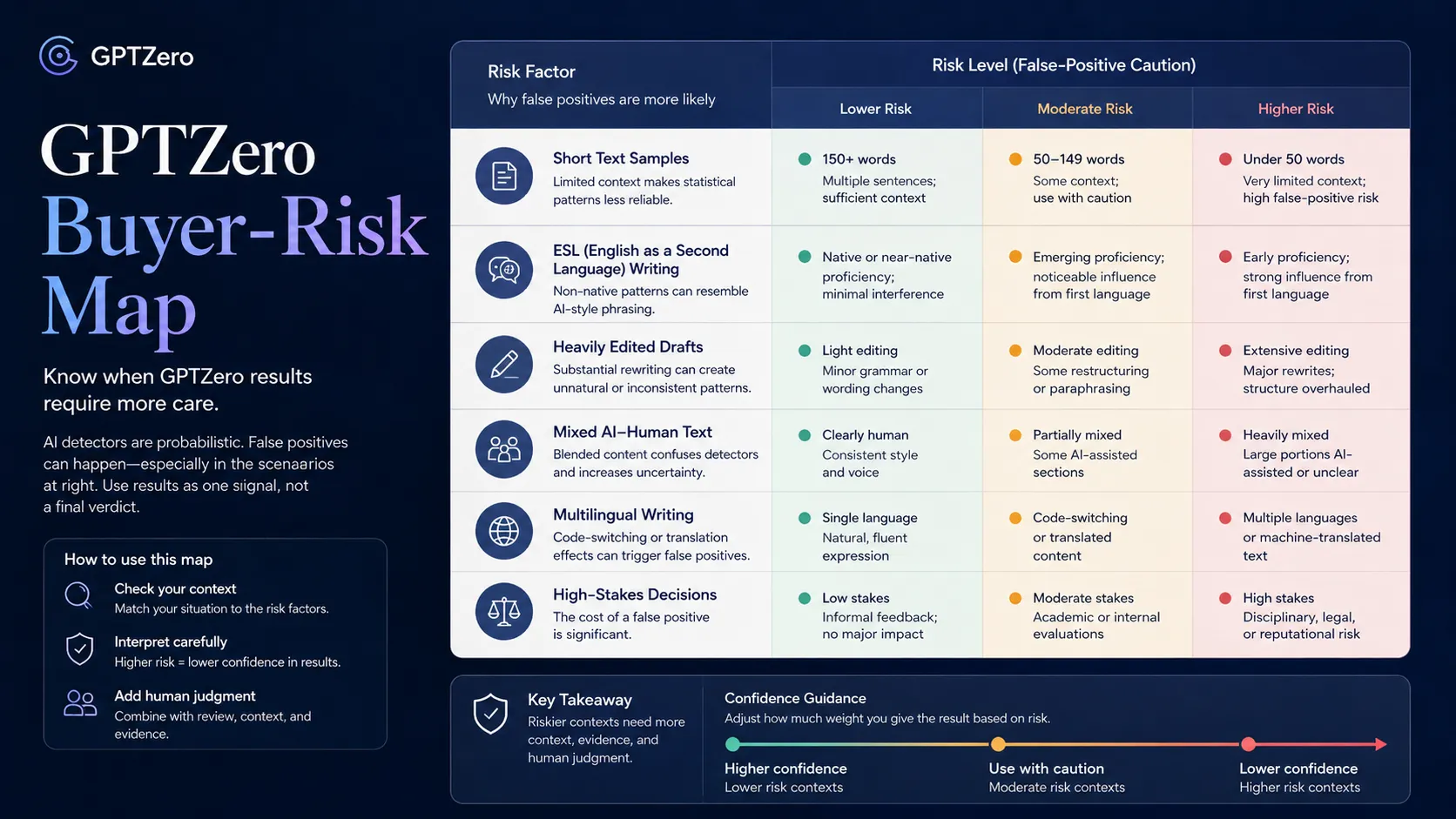
- – Your samples are often very short, multilingual, heavily edited, or outside normal prose contexts.
- – You mainly need plagiarism checking, grammar improvement, or brand editing rather than AI-origin review.
- – Your team has no policy for handling false positives or disputed results.
Review scorecard
Scored by workflow fit, ease of use, value, and stack compatibility. Weights reflect importance for typical buyers.
| Criteria | Score | ||
|---|---|---|---|
| Detection workflow fit | 8.7 | ||
| Interpretability | 8.5 | ||
| False-positive risk management | 7.8 | ||
| Stack integration | 8.0 | ||
| Pricing clarity | 7.2 | ||
| Buyer safety | 8.4 | ||
| Weighted overall | 8.2 / 10 | ||
On this page
Quick verdict
GPTZero is worth adding to your review stack if you need more than a casual AI checker. It is strongest when the buyer has a real workflow around suspicious drafts: a teacher reviewing student work, an editor checking contributor copy, a recruiter reading application materials, or a team trying to document AI-use concerns.
The important word is workflow. GPTZero can give you useful signals, but the tool becomes risky when someone treats a score as the whole story. I would use it as a conversation starter, a triage layer, or an authenticity support tool, not as a punishment button.
Who should use GPTZero
Picture a teacher with thirty essays, two suspiciously polished submissions, and no desire to start a messy argument based on instinct. GPTZero fits that moment because it gives a structured way to inspect the document, look at likely AI sections, and decide what to ask next.
It also makes sense for editors who receive outside drafts and need a consistent first-pass check. A publisher does not need a dramatic AI accusation every time a sentence looks too smooth. The better use case is quieter: scan the draft, look for patterns, review citations, ask for revision notes, and keep the editorial process consistent.
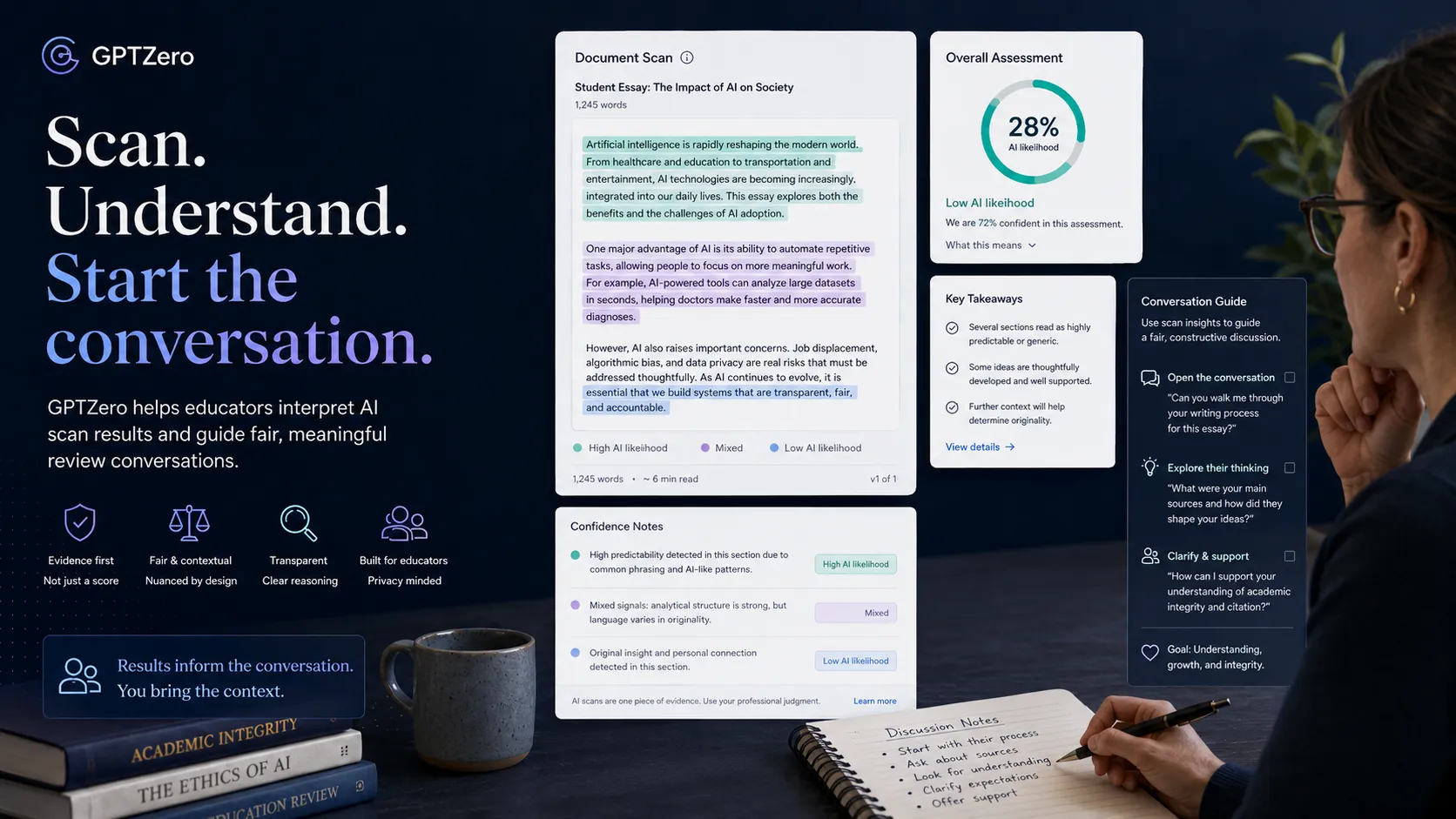
Recruiters and compliance teams are another practical fit, but only if they have clear rules. If an application letter or internal memo looks AI-assisted, GPTZero can help flag it for closer review. It should not become the only gate.
Who should skip GPTZero
Skip GPTZero if your plan is to paste a short paragraph, see a percentage, and treat that as proof. That is exactly where AI detectors become dangerous. Short samples, formulaic human writing, edited drafts, ESL writing, and mixed AI-human text can all make interpretation harder.
Also skip it if your real problem is writing quality. If you want cleaner grammar, better tone, or stronger structure, Grammarly, an editor, or a writing assistant may solve the actual job better. GPTZero is an authenticity and detection layer. It is not a full editorial process by itself.
Real workflow fit
GPTZero works best after a draft already exists. It is not where you plan the article, teach the writing assignment, brief the freelancer, or decide your content policy. It enters later, when a real document needs review and the reviewer needs something more consistent than suspicion.
The first useful layer is the detection signal. A buyer should look at document-level output, highlighted areas, confidence language, and whether the draft appears mixed. The friction point is that a score can feel more certain than it really is. If your team is not trained to interpret the result carefully, GPTZero can create false confidence.
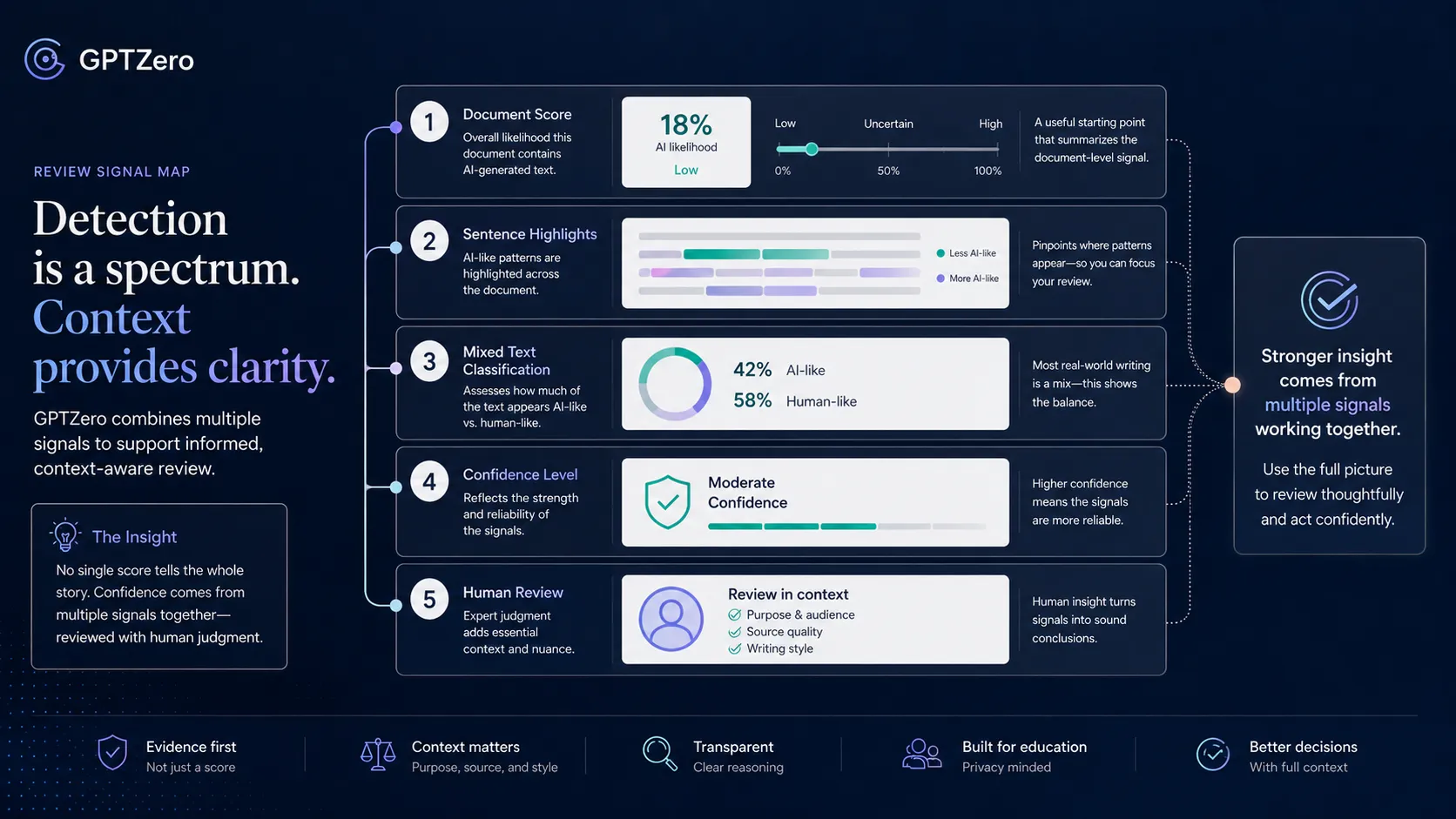
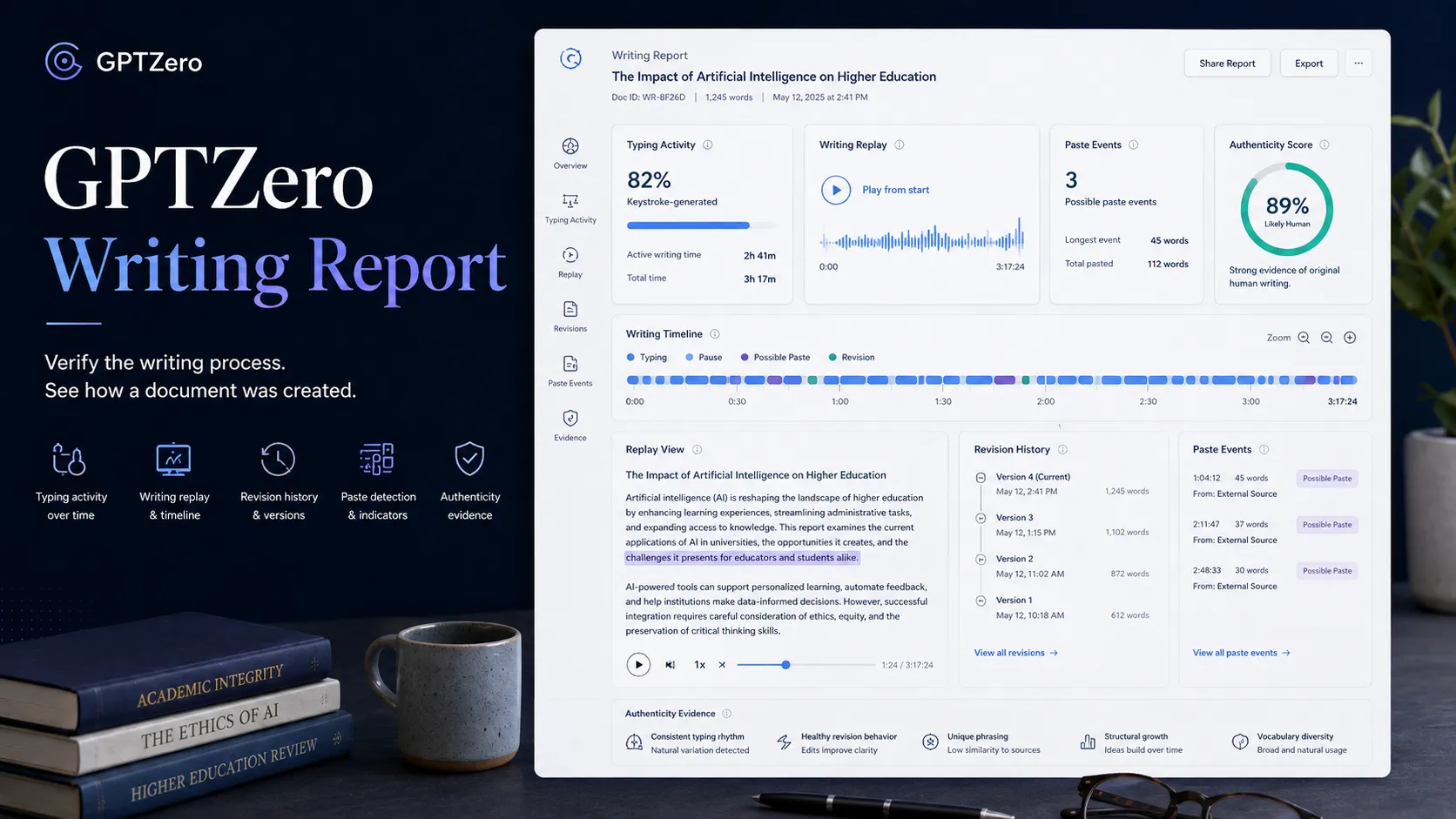
The second layer is writing evidence. GPTZero’s Chrome and Google Docs direction matters here because writing reports and replay-style context can help a reviewer understand process, not just output. That is more useful than asking a detector to guess everything from final text alone.
Where GPTZero fits in an AI stack
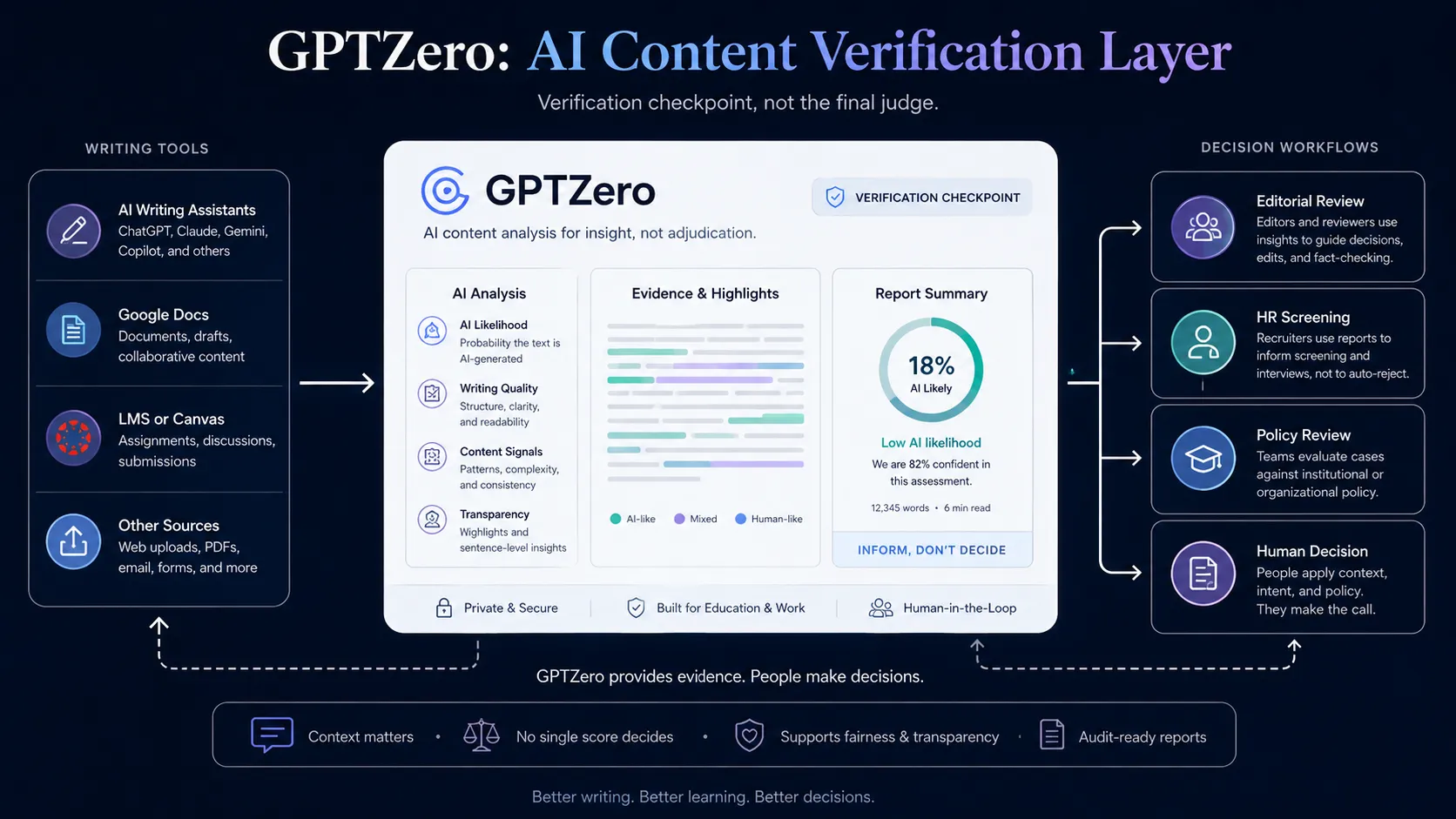
GPTZero sits after writing and before decision. In a content team, it pairs with Google Docs, Grammarly, Originality.ai, CMS review, and editorial policy. In a school, it pairs with assignment design, LMS workflows, student drafts, and a clear integrity process.
It does not replace policy. It does not replace a teacher, editor, recruiter, or compliance lead. The stack role is closer to a verification checkpoint: useful enough to standardize, too sensitive to automate blindly.
What GPTZero does well
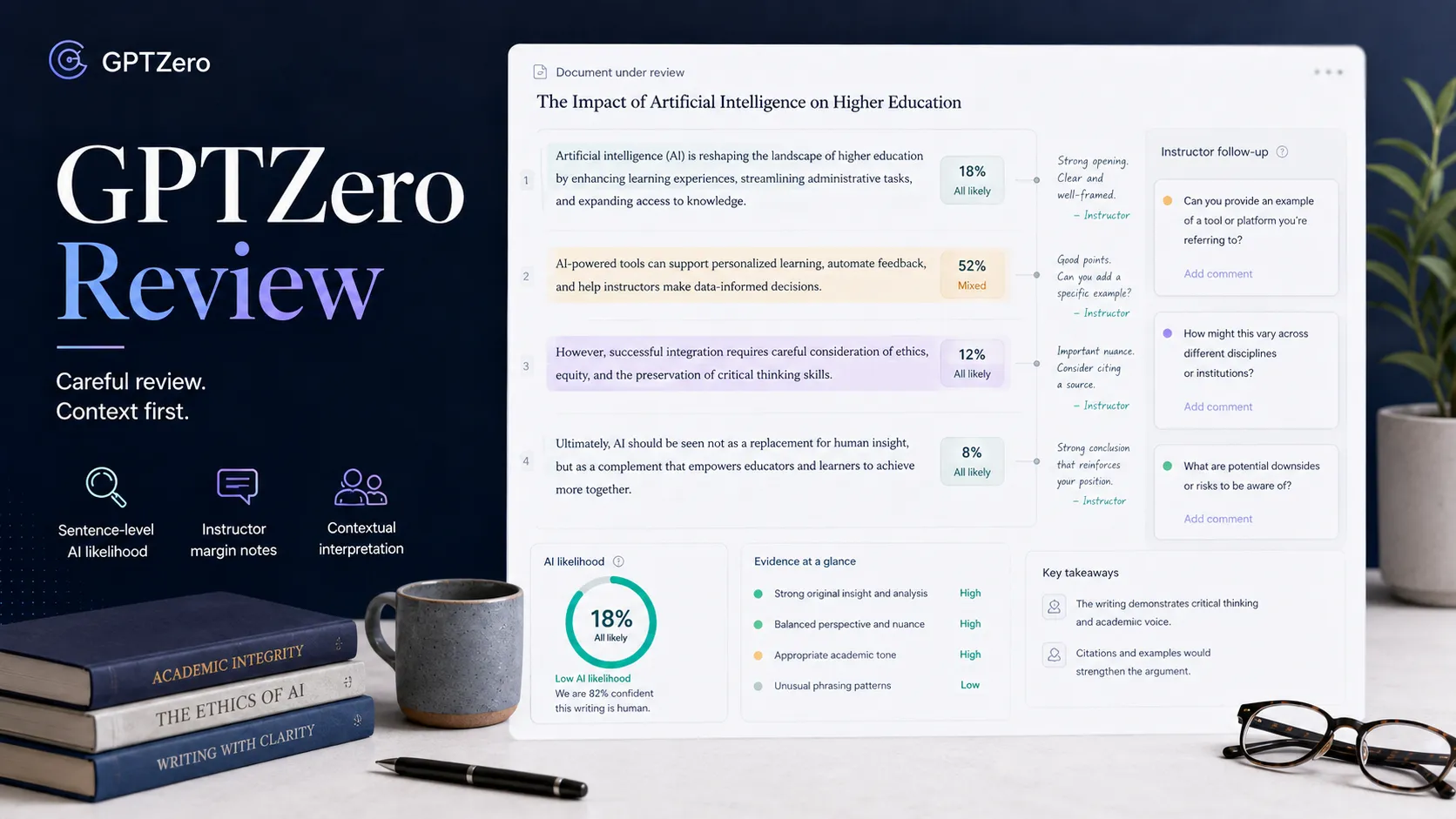
GPTZero’s biggest strength is that it treats detection as more than a binary label. Sentence highlights and mixed-document framing are useful because real writing is messy. A student might use AI for one paragraph. A freelancer might ask AI to polish a rough section. A recruiter might see a cover letter that blends personal details with generic generated phrasing.
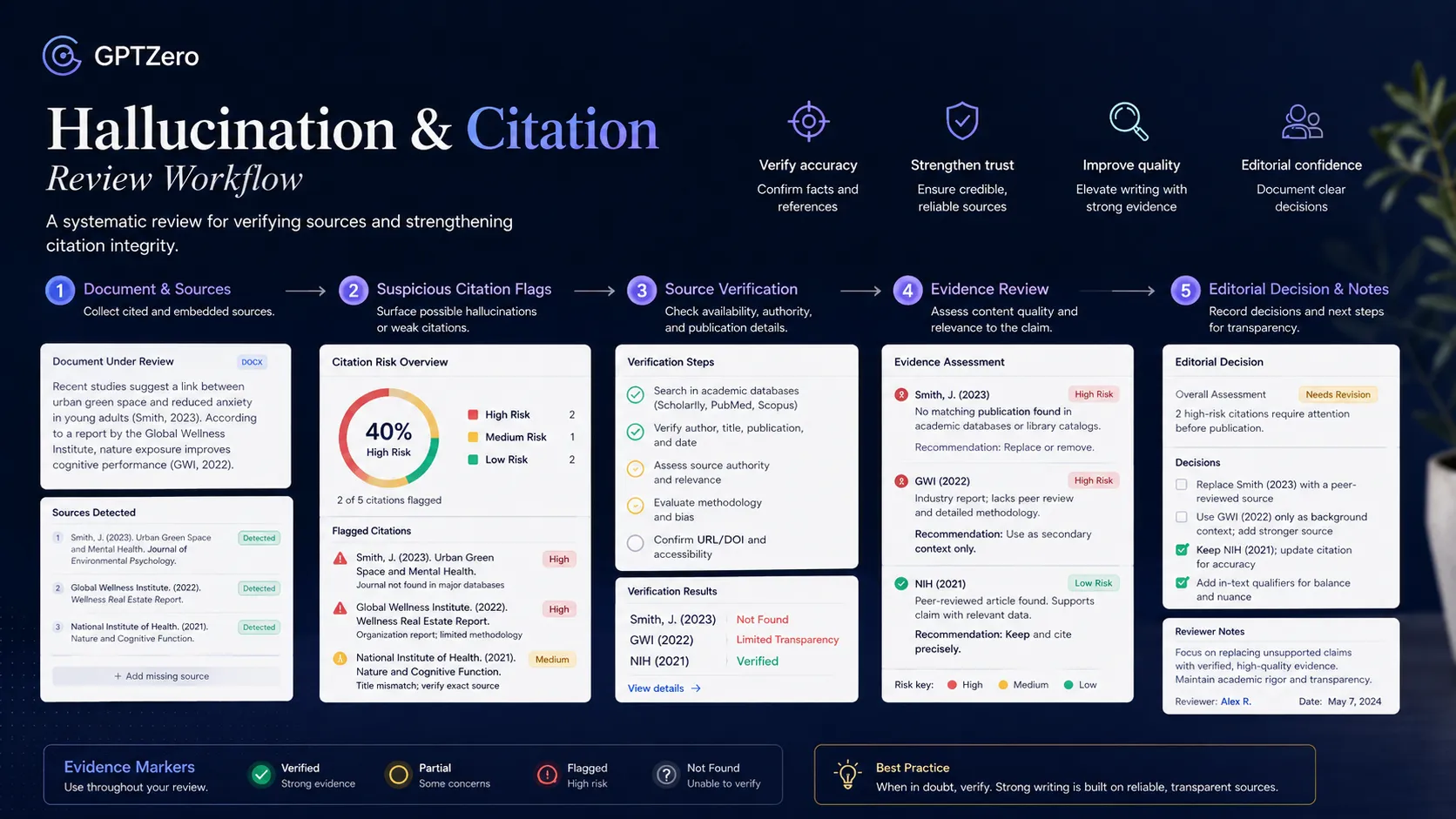
The second strength is adjacent review. GPTZero now positions more than a plain AI detector, with tools around hallucinated citations, plagiarism, grammar, authorship verification, AI reviewer workflows, Chrome, Google Docs, Canvas, Zapier, and API access. That makes it easier to build a review stack around documents instead of sending reviewers to scattered tools.
The surprise is that GPTZero is most interesting when it moves away from a simple detector page. The more it supports writing history, document review, and workflow evidence, the less it depends on one fragile final-text guess.
Where GPTZero falls short
The main weakness is not unique to GPTZero. AI detection is a sensitive category. A confident-looking output can push a reviewer toward overreach, especially in school or hiring settings. That is why I would never recommend it without a written policy and a second review step.
The second weakness is pricing clarity. The public pricing page confirms billing toggles, annual savings language, team plans, and API access, but not every individual plan detail was visible in plain page text during this research pass. That does not mean the pricing path is unavailable. It means buyers should check the live checkout screen before publishing exact prices or buying seats.
Pricing judgment
Start free if you only need occasional checks or want to understand the workflow. Pay only when you need higher-volume review, team use, writing evidence, integrations, API access, or a more organized process across reviewers.
For schools and companies, the real question is not only monthly price. It is whether GPTZero reduces confusion, documents review steps, and helps staff make more consistent decisions. If your team still has no AI-use policy, buying a detector first may put the tool ahead of the process.
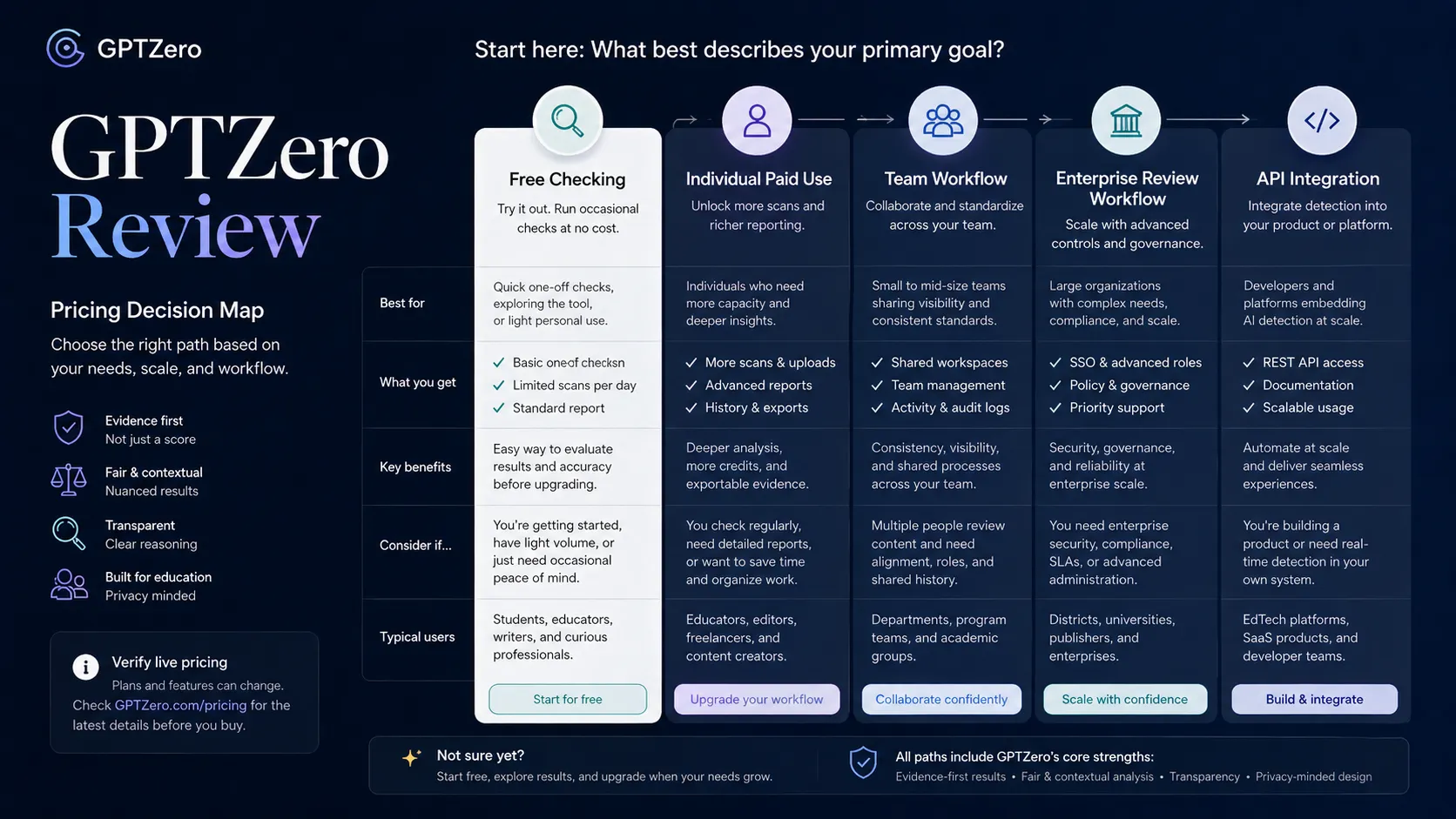
Verify current pricing on the official pricing page.
Best alternatives to compare
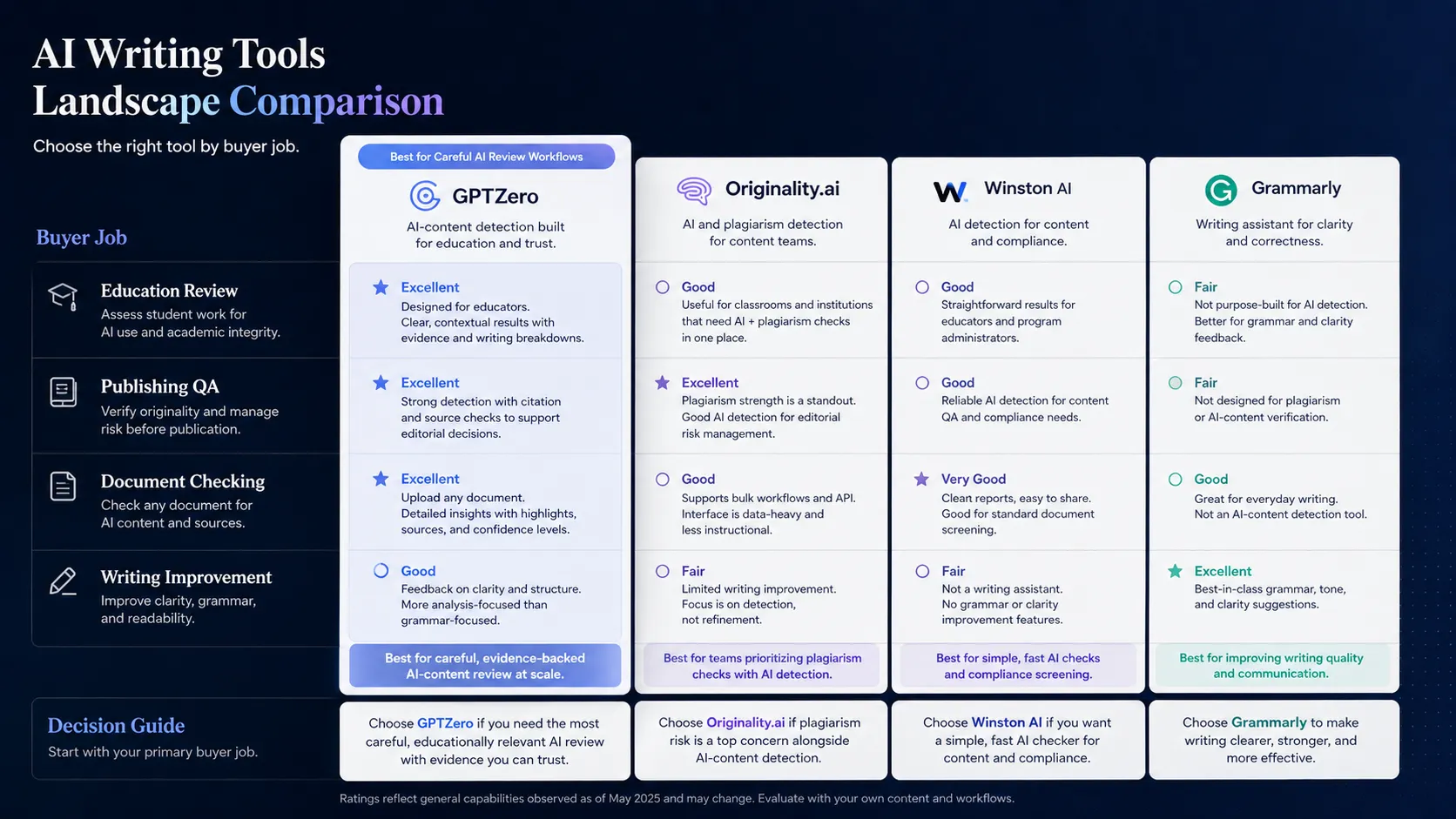
Originality.ai is the first comparison for publishers, SEO teams, and agencies. It is closer to a content-operation QA tool, where AI detection sits beside plagiarism checks and publishing workflows.
Winston AI is worth comparing if your review process is document-heavy and education-oriented. It may be a better fit for teams that want a different interface or workflow around files, OCR-style review, and classroom-friendly reporting.
Grammarly is not a detector-first replacement. Compare it only if the real job is improving writing quality, tone, and grammar. If your buyer problem is authenticity review, GPTZero is closer to the center of the stack.
Final decision
Add GPTZero to your stack if you need a structured AI-content review layer for education, publishing, recruiting, or institutional writing workflows, and you are willing to pair the scan with human judgment.
Compare Originality.ai first if your main workflow is SEO publishing, agency content QA, plagiarism checking, and team-based editorial operations.
Skip GPTZero for now if you want a tool to make final accusations from one scan, or if your organization has no clear policy for false positives, appeals, and acceptable AI assistance.
Frequently asked questions
Is GPTZero accurate enough to use in school?
Does GPTZero have a free AI detector?
Who should pay for GPTZero?
Can GPTZero prove that someone used AI?
What are the best GPTZero alternatives?
Where GPTZero fits in a stack
AI-content verification layer for education, publishing, recruiting, compliance, and editorial review workflows
Does not replace
- – Human editorial judgment
- – Academic integrity policy and appeal process
- – Legal review for employment or disciplinary decisions
- – Plagiarism policy, source verification, and factual review
- – A clear disclosure policy for acceptable AI use
Pairs well with
Head-to-head comparisons
Top alternatives to consider
If GPTZero is not the right fit, these are the most common alternatives.
Originality.ai is a better comparison for publishers and SEO teams that also care about plagiarism, content QA, team workflows, and web publishing risk.

Winston AI is a direct alternative for users comparing AI detection, plagiarism checks, OCR-oriented workflows, and education-friendly review use cases.

Grammarly is not a direct detector-first replacement, but it is worth comparing if the main job is improving writing quality rather than proving text origin.
Review methodology
Editorial review based on GPTZero's official homepage, pricing page, technology page, Chrome and Google Docs positioning, public research, and current third-party coverage. No hands-on testing was conducted.
This review is based on public product information and current research, not direct hands-on testing with private documents or institutional workflows.
Not covered: Hands-on benchmark testing with private document sets · Enterprise contract review · Legal, academic, or HR policy advice · Private API security audit