Winston AI Review
Winston AI review for publishers, educators, and SEO teams weighing AI detection, OCR, plagiarism checks, reports, and pricing.
Strong for editorial integrity workflows, but detector results still need human review.
Use it if…
- ✓ You need AI detection, plagiarism checking, OCR, and shareable reports in one review workflow.
- ✓ Your team reviews contributor content, student submissions, scanned documents, or client drafts.
- ✓ You want a detector that fits into browser, WordPress, Zapier, classroom, or API workflows.
Skip it if…
- – You only want a casual one-off AI detector with no reporting requirement.
- – Your organization needs legally defensible authorship proof from a detector score alone.
- – You are actually looking for a writing assistant, paraphraser, or humanizer.
Review scorecard
Scored by workflow fit, ease of use, value, and stack compatibility. Weights reflect importance for typical buyers.
| Criteria | Score | ||
|---|---|---|---|
| Workflow fit | 8.5 | ||
| Detection context | 7.5 | ||
| Ease of use | 8.0 | ||
| Pricing clarity | 7.5 | ||
| Stack value | 8.0 | ||
| Weighted overall | 7.9 / 10 | ||
On this page
Quick verdict
Winston AI is not the kind of tool I would use as a final judge of whether someone wrote something with AI. That is the wrong mental model for almost every detector.
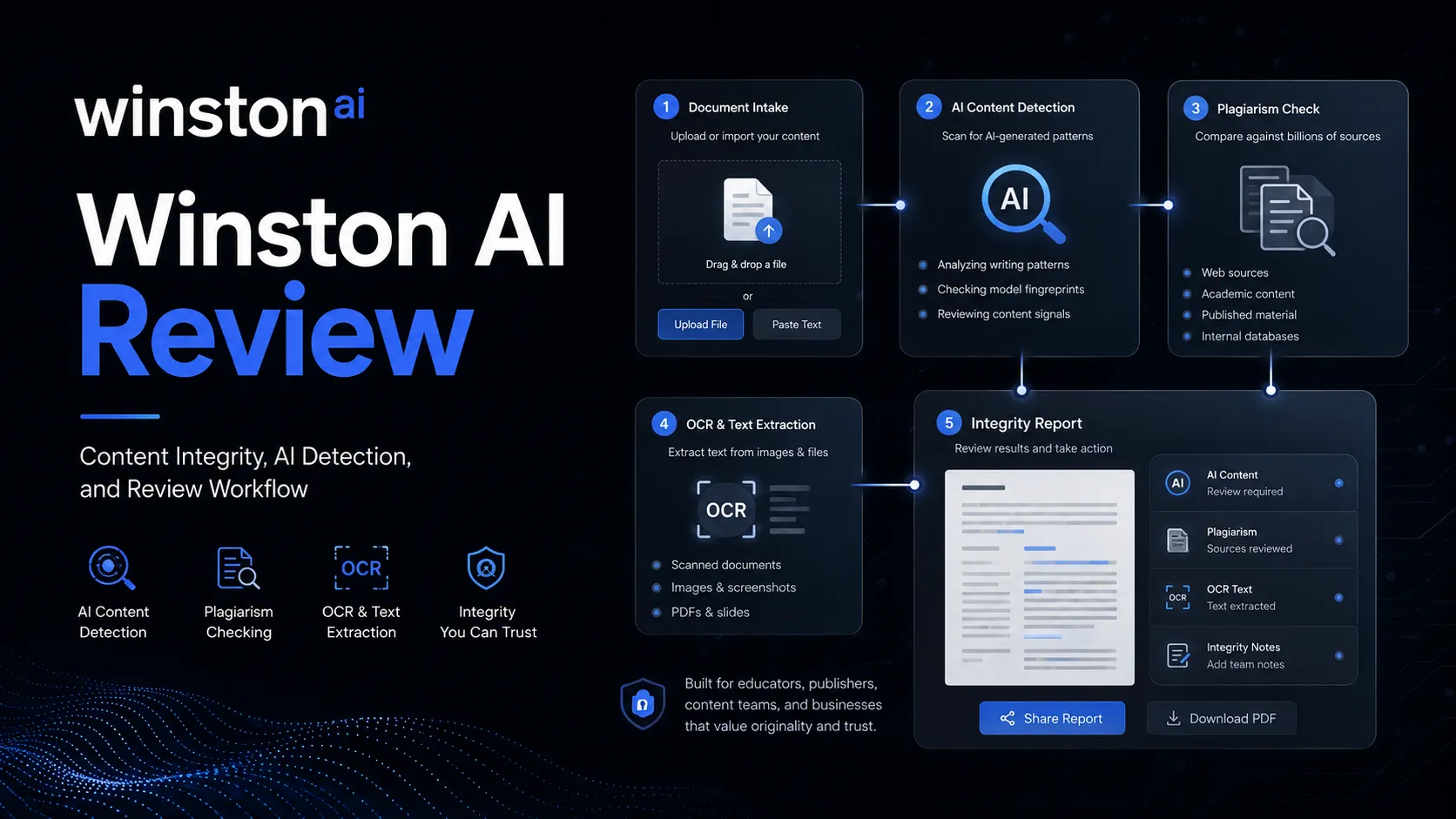
The more practical question is different: do you need a repeatable content integrity workflow with AI detection, plagiarism checking, OCR, shareable reports, and integrations around it? For that job, Winston AI is a stronger fit than a basic free detector.
The friction is that detector scores feel more certain than they really are. Winston AI publishes a high accuracy claim and offers useful review features, but buyers should still treat results as signals that guide review, not as final proof. That matters for schools, publishers, agencies, and SEO teams, because a false positive can create real trust problems.
Who should use Winston AI
Winston AI makes sense for teams that review content before it reaches a public, academic, or client-facing destination. A publisher checking contributor drafts has different needs from someone casually pasting a paragraph into a free detector. The publisher needs reports, highlights, workflow memory, plagiarism context, and a way to explain the review decision.
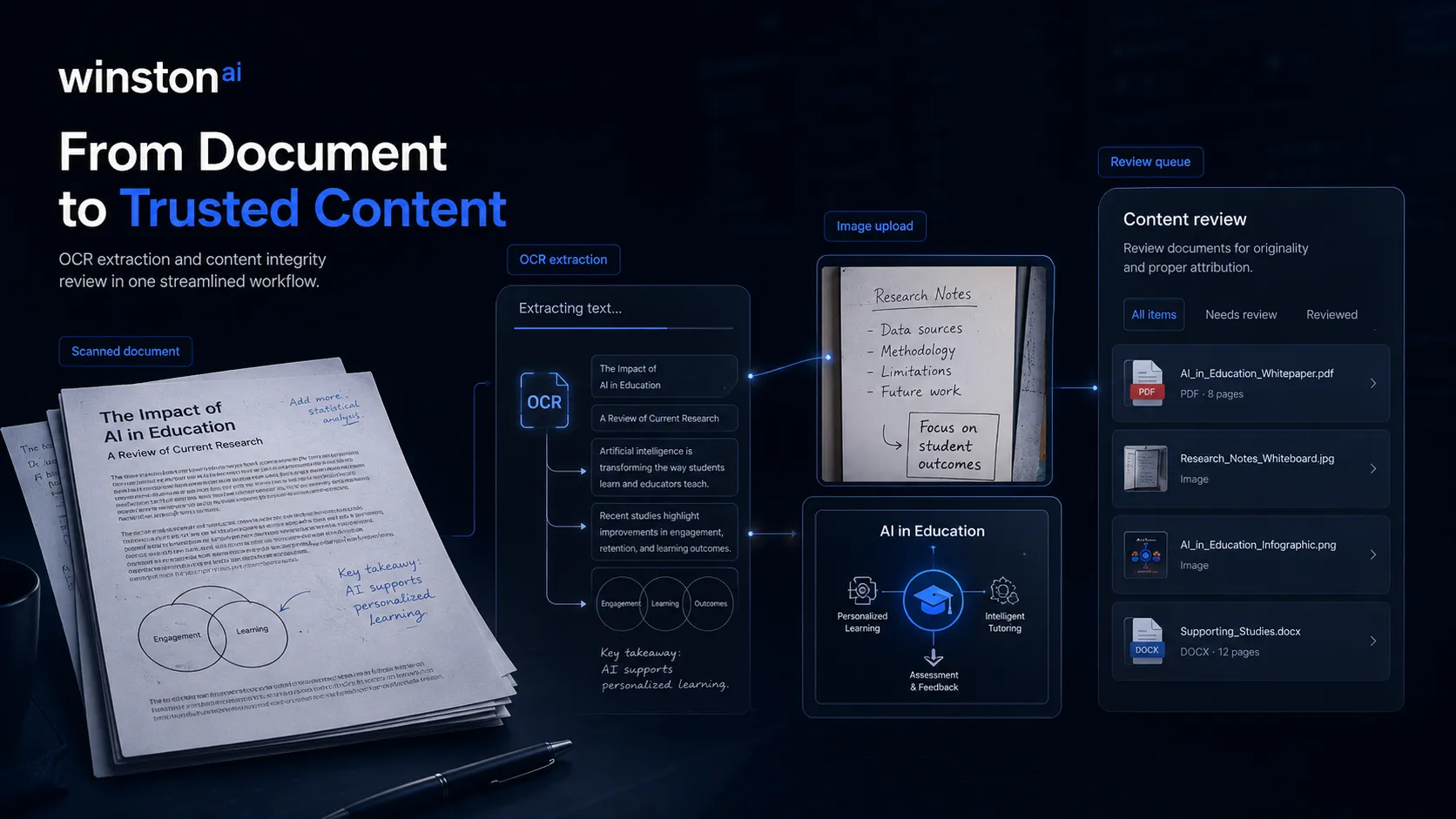
It is also a good fit for document-heavy workflows. Winston AI officially lists document scanning, picture and handwriting OCR, PDF reports, plagiarism checks, and AI image detection. That makes it more useful when the input is not just clean pasted text.
The best-fit buyer is someone who already has a review process but needs a cleaner integrity checkpoint. Think editors, content managers, academic teams, district administrators, SEO operators, and agencies that receive drafts from multiple contributors.
Who should skip Winston AI
Skip Winston AI if you want a detector to give you a simple yes or no answer. AI detection is not that clean. Text can be mixed, edited, translated, paraphrased, or written by a human who happens to use predictable phrasing.
Also skip it if your only job is occasional curiosity. The free trial may be enough to inspect the product, but a paid plan only makes sense when detection, plagiarism review, reporting, or OCR becomes a repeated workflow.
Writers who want help drafting, editing, or rewriting should not start here either. Winston AI is an integrity checker. Grammarly, Claude, ChatGPT, or a dedicated editor is a better fit for improving the draft itself.
Real workflow fit
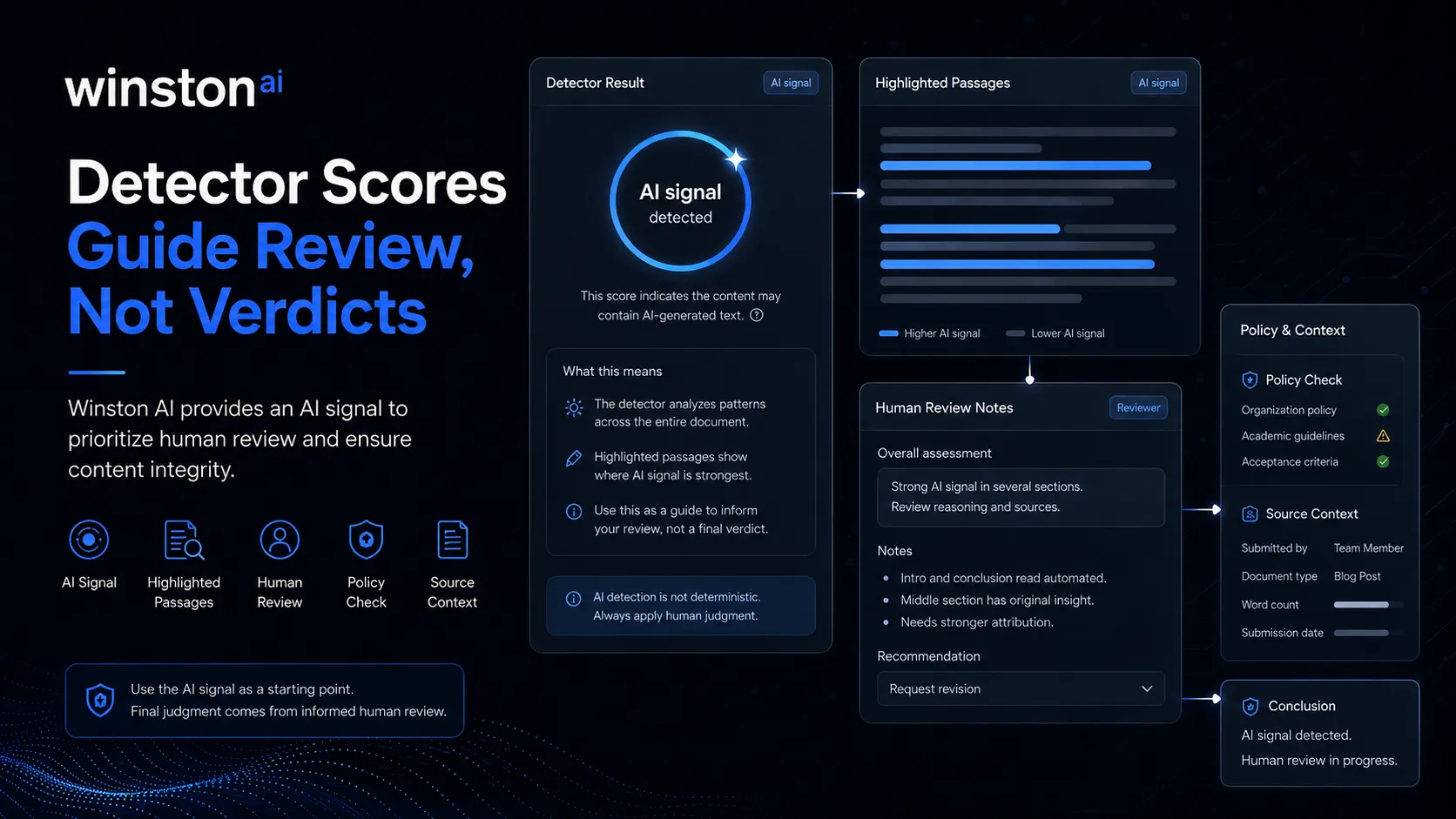
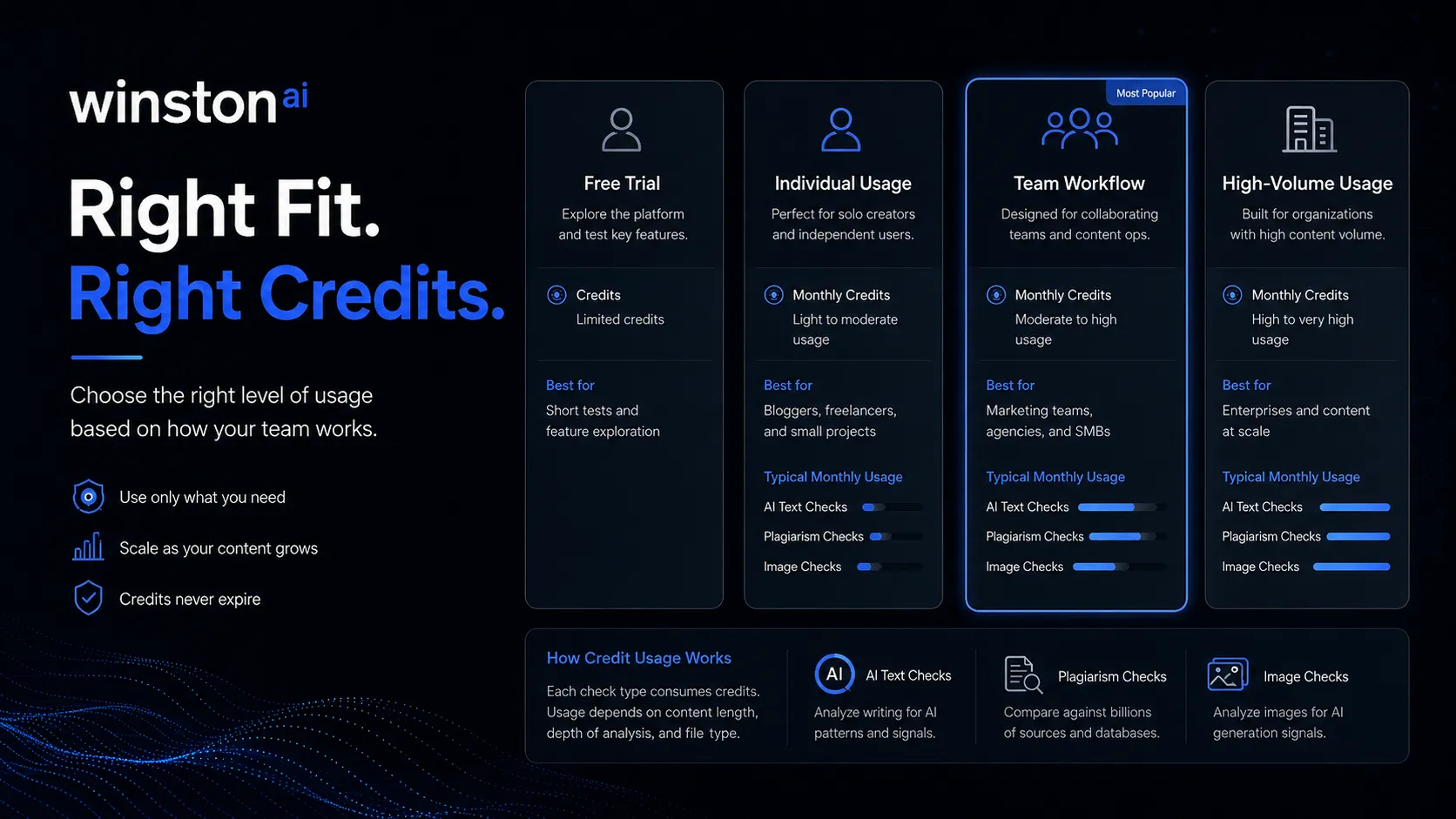
The real workflow is straightforward: collect the draft, scan it, inspect sentence-level signals, check for plagiarism when needed, export or share a report, then make a human decision. That last step matters.
A detector result should raise questions such as: which sections look suspicious, does the writing history support the result, are the sources real, did the student or writer submit outlines or drafts, and does the flagged text match your policy? It should not automatically become an accusation.
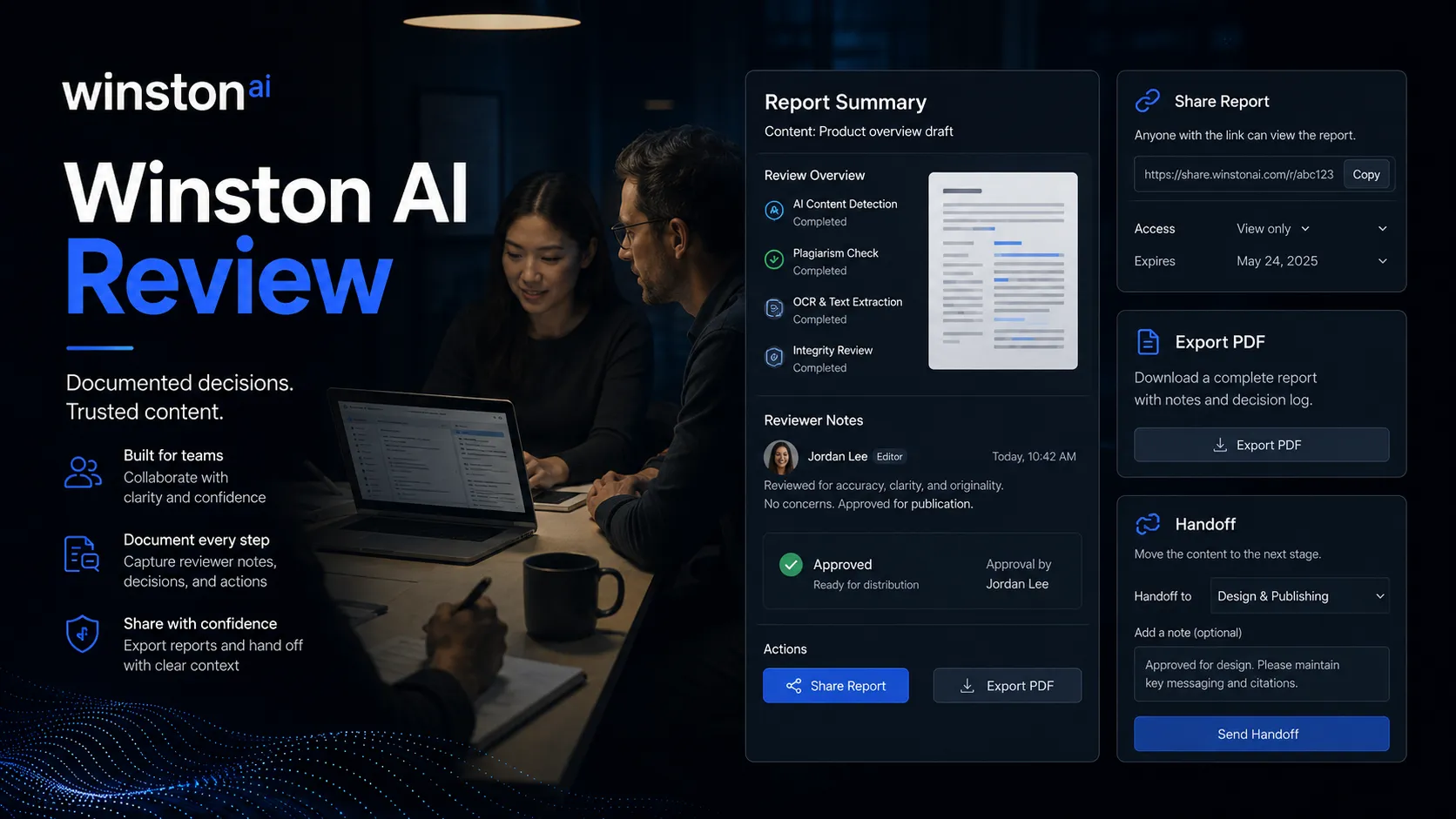
The practical advantage of Winston AI is that it gives reviewers more than a raw detector label. The official pages describe sentence-level assessment, shareable reports, OCR, plagiarism checks, file upload, import from URL, and integrations. That is the difference between a tool you test once and a tool that can sit inside a workflow.
Where Winston AI fits in an AI stack
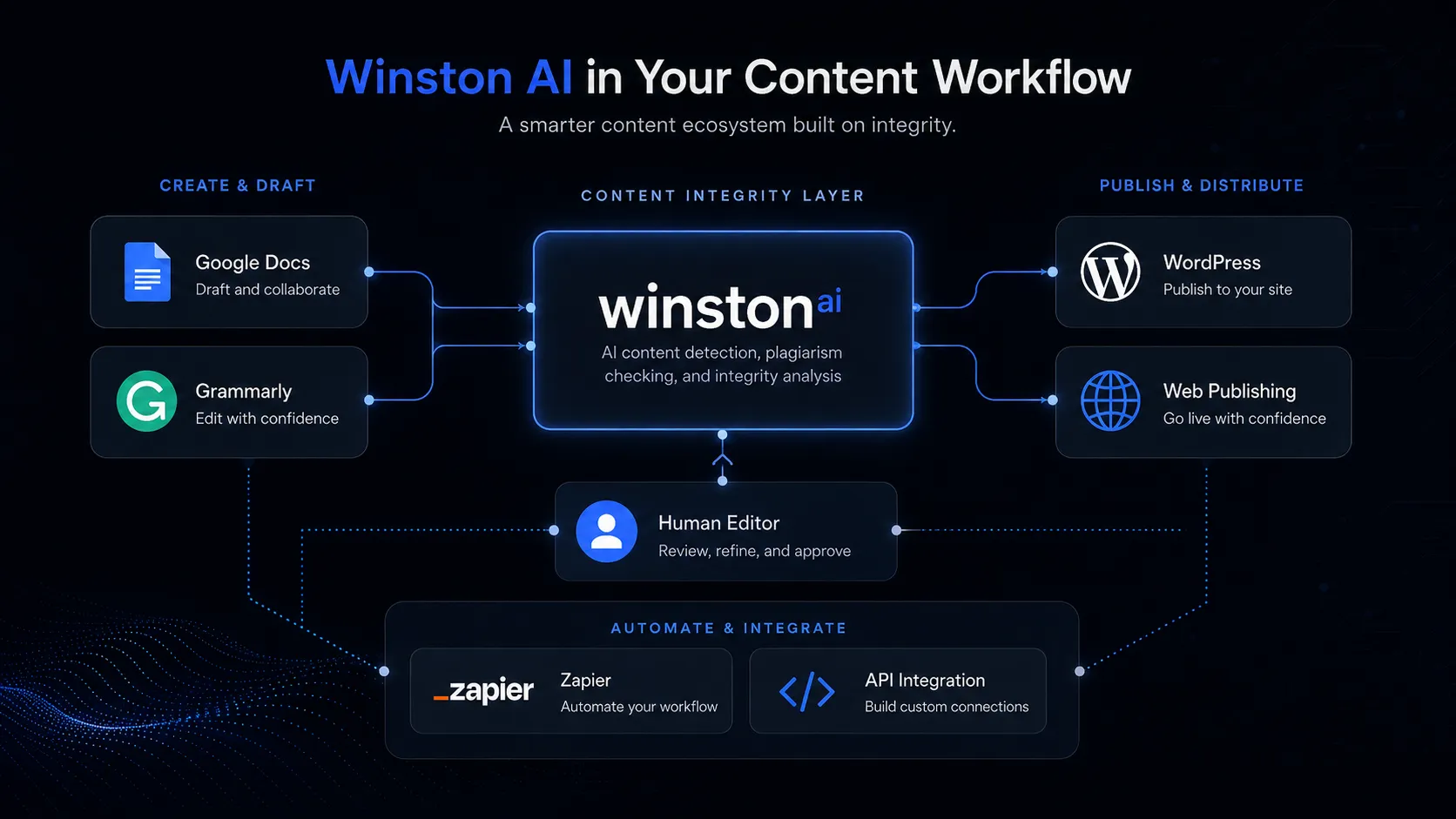
Winston AI belongs near the end of the content stack. Drafting happens elsewhere. Editing happens elsewhere. Source checking and fact checking may happen elsewhere too. Winston AI sits after the draft is mostly complete, when the team needs to check originality risk and create a record of the review.
For a publisher, that might mean Google Docs, Grammarly, human editing, Winston AI, then WordPress. For an education workflow, it may sit near Google Classroom or a submission review process. For a technical team, the API may be the route if they need to build checks into a product or internal system.
It does not replace editorial standards. It also does not replace plagiarism policy, citation checks, source review, or a clear appeal process. That is the stack mistake buyers need to avoid.
What Winston AI does well
Winston AI does well when the content review job is broader than AI detection. The official product pages list AI detection for major models, plagiarism checking, AI image and deepfake detection, OCR, shareable PDF reports, browser checks, WordPress, Zapier, Google Classroom, and API routes. That is a useful bundle for teams that want fewer separate review tools.
The OCR angle is especially useful. Many detector tools assume the text is already clean and pasted into a box. Winston AI is more attractive when teams receive scans, screenshots, handwritten material, or uploaded documents.
The plagiarism pairing also matters. A text can be human-written and still copied. A text can be AI-assisted and properly edited. A content integrity workflow should not collapse everything into one detector score.
Where Winston AI falls short
The main weakness is not unique to Winston AI. It is the detector category itself.
AI detection is a moving target. Model outputs change. Human editing changes the pattern. Paraphrasing changes the pattern. Mixed human and AI drafts are especially messy. Third-party testing and academic literature both point to the same practical caution: detector performance can vary by sample, dataset, and real-world usage.
That does not mean Winston AI is useless. It means the buyer should not overstate what it can prove. A good use case is: this section needs review. A risky use case is: this student or writer definitely used AI because the score says so.
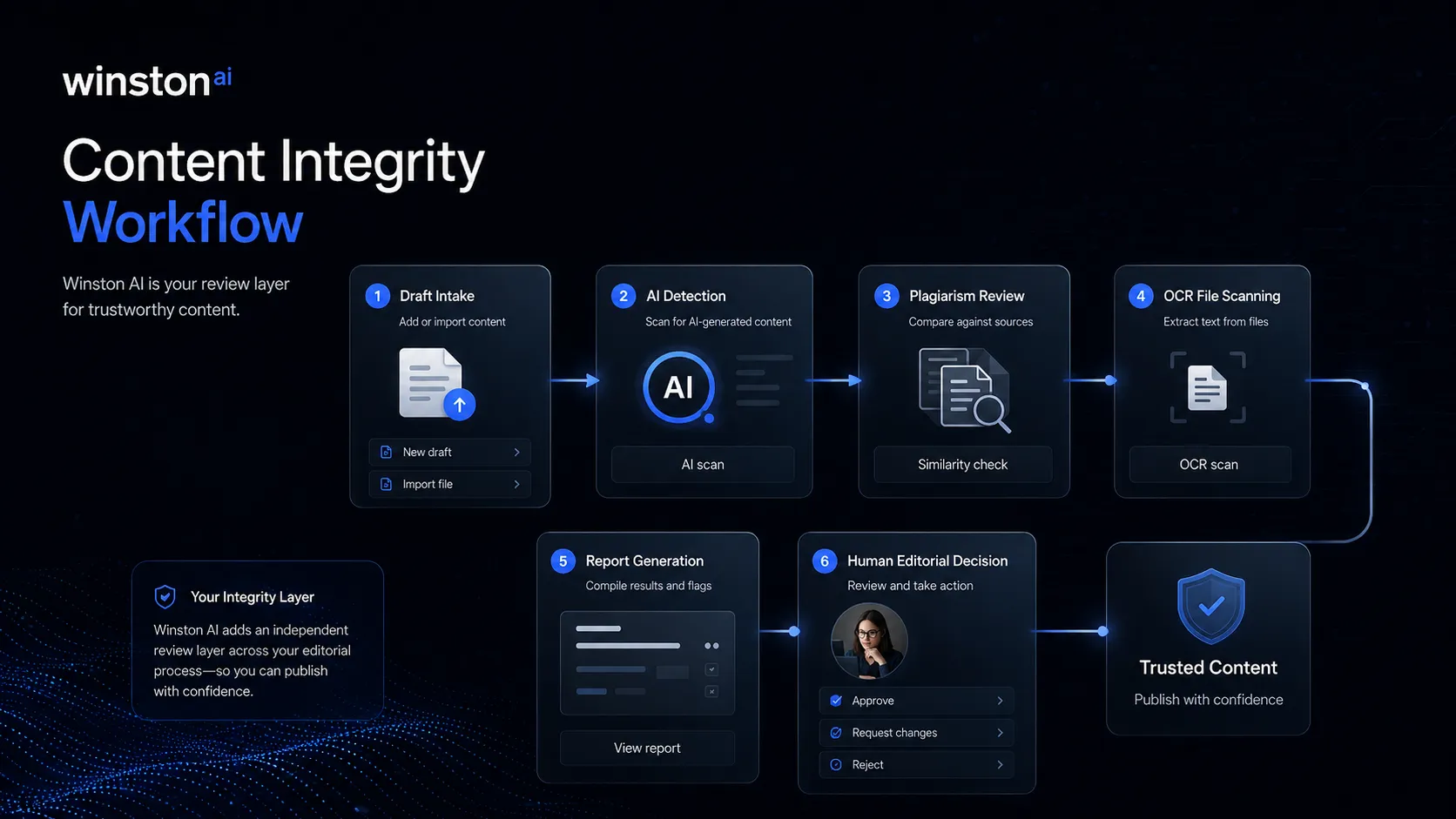
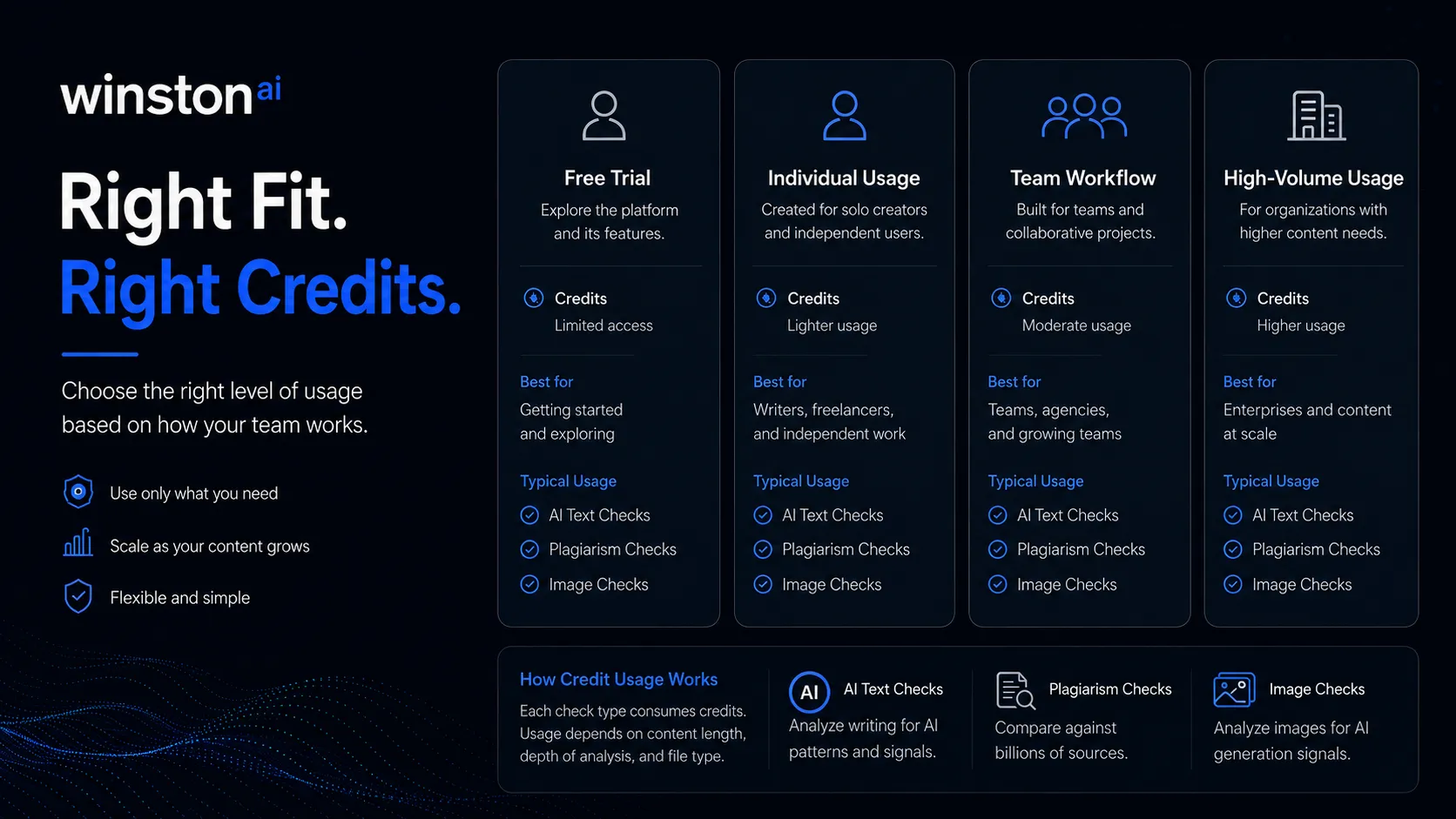
The second weakness is pricing interpretation. Credits are not hard to understand, but the buyer still needs to estimate volume. AI detection consumes credits differently from plagiarism checking and AI image detection. The official pricing page lists 1 credit per word for AI detection, 2 credits per word for plagiarism, and 200 to 500 credits per image for AI image detection.
Pricing judgment
Winston AI’s pricing is more attractive than the older note in the input data suggests, but buyers need to read the annual and monthly toggle carefully.
As of this review pass, the official pricing page lists a Free option with 2,000 credits for a 14-day trial. The annual pricing view shows Essential at $10/month, Advanced at $16/month, and Elite at $26/month. The monthly pricing view shows Essential at $18/month, Advanced at $29/month, and Elite at $49/month.
The plan choice should be based less on the label and more on credit usage. A teacher scanning occasional drafts has a different usage pattern from a publisher checking long articles with plagiarism review turned on. A team scanning images, OCR files, and plagiarism will burn credits faster than a person doing plain AI text checks.
My practical take: start with the free trial, scan a realistic batch of documents, then calculate credit burn. Do not pick a plan from the headline price alone.
Best alternatives to compare
Compare Winston AI against GPTZero if your job is education-first AI detection. GPTZero is often the more obvious short-list item for classroom and academic integrity use cases.
Compare Winston AI against Originality.ai if your job is publisher-first content quality control. Originality.ai is often discussed around SEO and editorial teams, while Winston AI has a broader OCR and reporting angle.
Compare Winston AI against Copyleaks if your organization cares about enterprise plagiarism, LMS workflows, and policy-heavy review. That decision is less about a single score and more about institutional fit.
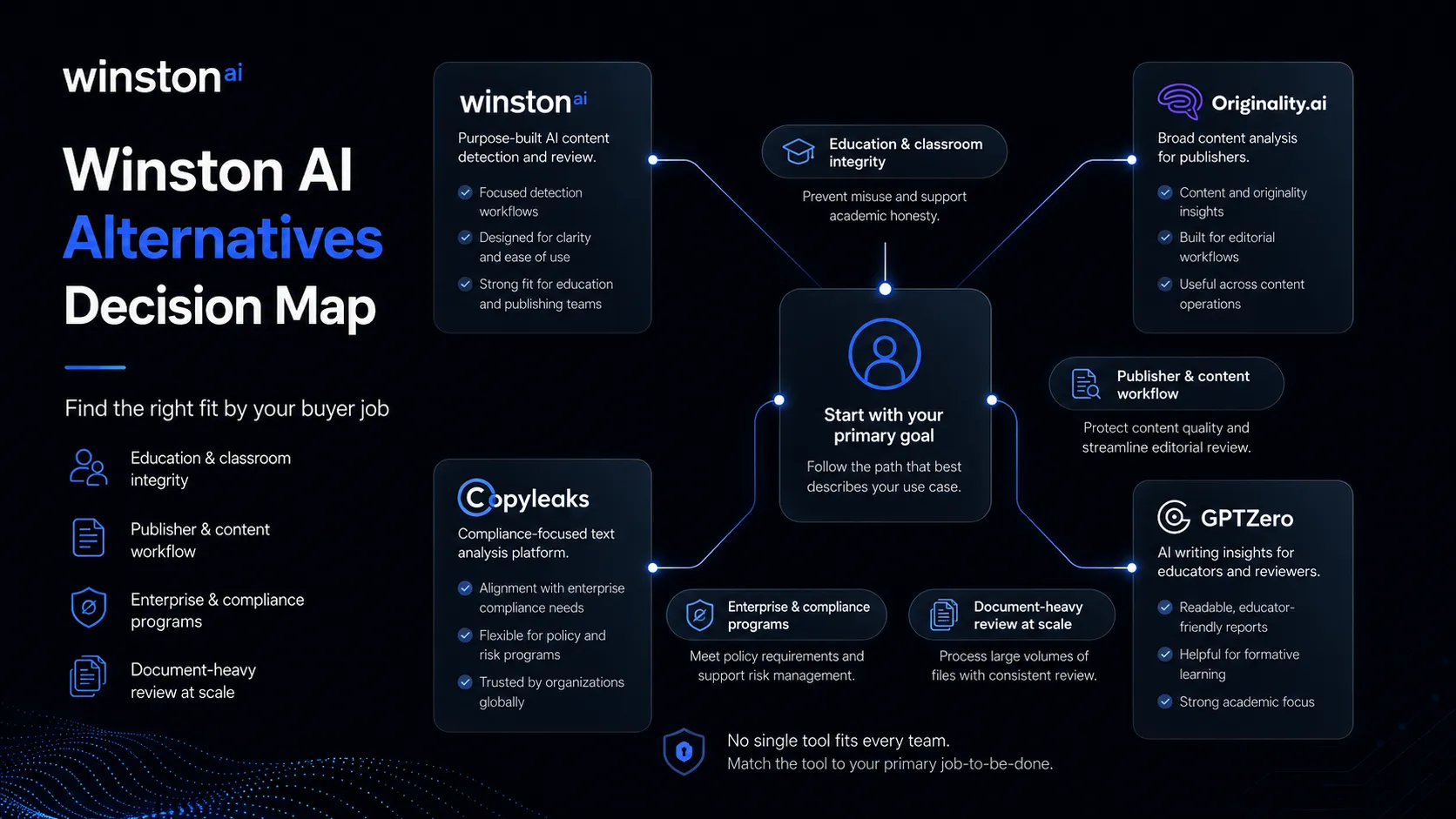
One extra note: do not compare Winston AI with writing tools as if they solve the same problem. Grammarly, Claude, and ChatGPT help create or improve drafts. Winston AI checks integrity after the draft exists.
Final decision
Add Winston AI to your stack if you review a meaningful volume of content and need AI detection, plagiarism checks, OCR, shareable reports, and workflow integrations in one place.
Compare it first if you are choosing between classroom integrity, SEO publishing, and enterprise compliance workflows. The best tool depends on who reviews the content, what evidence they need, and what happens after a score appears.
Skip it for now if you only need a casual detector or if your team is tempted to treat detector output as final proof. Winston AI is best used as an integrity checkpoint, not as a judge.
Frequently asked questions
Is Winston AI worth it?
Does Winston AI have a free plan?
Can Winston AI prove that a text was written by AI?
Does Winston AI check plagiarism?
Does Winston AI support OCR?
What are the best Winston AI alternatives?
Where Winston AI fits in a stack
AI content verification and originality-checking layer
Does not replace
- – Human editorial judgment
- – Source verification
- – Academic misconduct policy
- – Legal authorship proof
- – CMS publishing workflow
Pairs well with
Head-to-head comparisons
Top alternatives to consider
If Winston AI is not the right fit, these are the most common alternatives.
GPTZero is the closest comparison for educators and academic integrity workflows where AI writing detection is the main job.
Originality.ai is a stronger comparison for SEO publishers that want AI detection and originality checks tied to editorial operations.
Copyleaks is worth comparing when enterprise plagiarism, LMS, and compliance workflows matter more than a lightweight editorial interface.
Review methodology
Editorial review based on current public product information, official documentation, pricing pages, and third-party coverage. No hands-on testing was conducted unless explicitly stated.
This review is based on public product information and research, not direct hands-on testing.
Not covered: Hands-on benchmark testing · Enterprise contract terms · Legal or academic adjudication advice