 S
S Semrush
Semrush is an AI SEO and digital marketing intelligence platform best for SEO teams, agencies, and serious content sites that need keyword research, competitor analysis, audits, rank tracking, backlinks, and visibility monitoring in one workflow.
Quick answer
Semrush is an AI SEO and digital marketing intelligence platform best for SEO teams, agencies, and serious content sites that need keyword research, competitor analysis, audits, rank tracking, backlinks, and visibility monitoring in one workflow.
Semrush can be overkill if you only need a few keyword ideas or a simple on-page writing score. Buyers should verify current plan names, user seats, AI visibility access, add-ons, limits, and billing terms before checkout because Semrush now has both classic SEO Toolkit paths and broader Semrush One-style bundles.
What is Semrush?
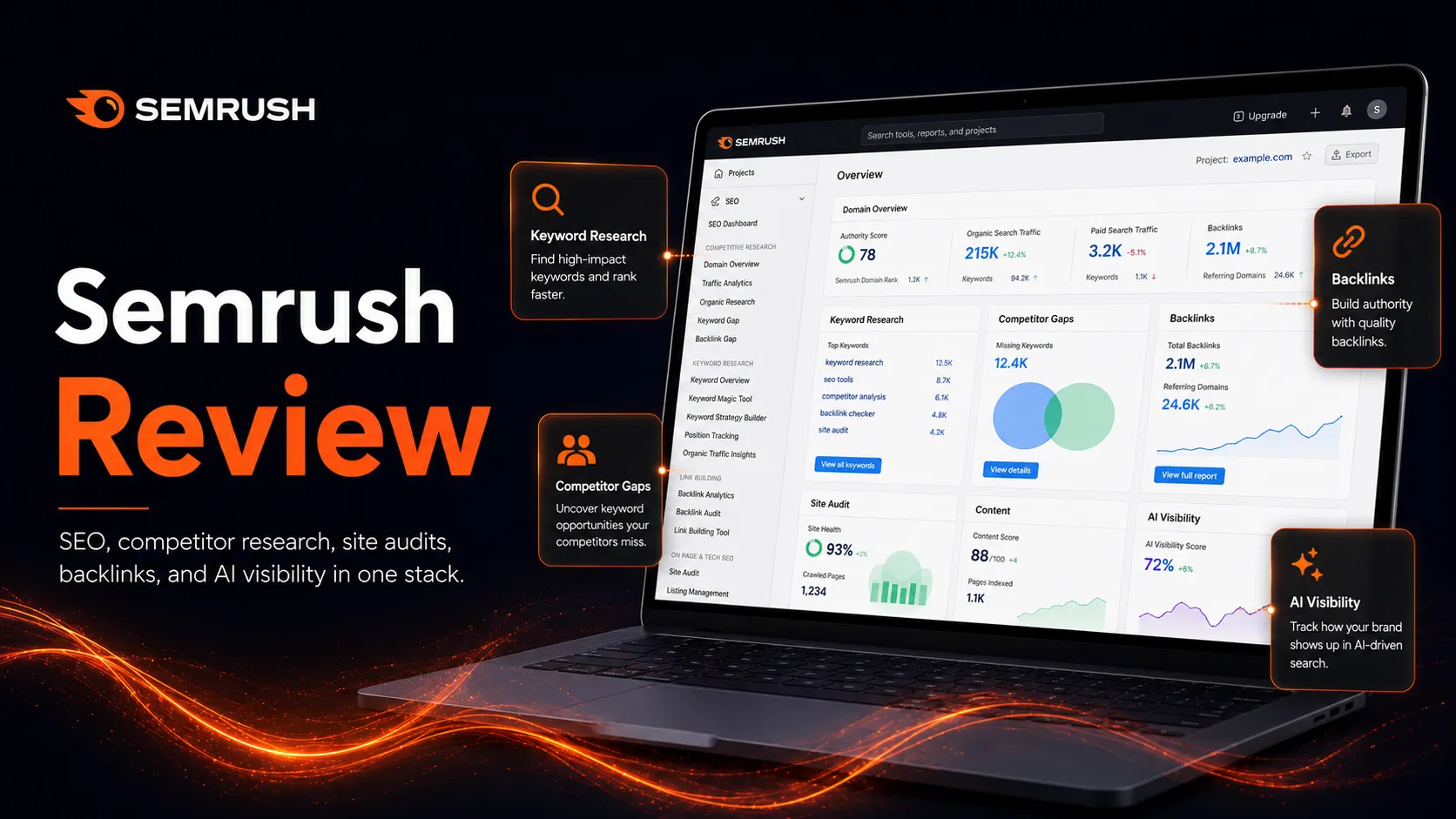
Semrush brings several SEO jobs into one workspace: keyword discovery, competitor research, backlink analysis, technical site audits, position tracking, reporting, content planning, and newer AI-search visibility workflows. It is broader than a single-purpose content optimizer because it helps teams decide what to target, what competitors are doing, what technical issues need attention, and how search visibility changes over time. The strongest fit is a site or team that will turn research into regular publishing, optimization, and reporting.
Who Semrush fits best
Choose Semrush if SEO is a serious acquisition channel and you need research, tracking, auditing, competitor intelligence, and reporting in one stack layer.
- ✓SEO agencies managing multiple client campaigns
- ✓In-house SEO teams tracking rankings, backlinks, and competitors
- ✓Affiliate and content sites planning keyword-led growth
- ✓Marketing teams adding AI visibility monitoring to SEO reporting
Not ideal for
- •Solo bloggers who only need occasional keyword ideas
- •Teams that only want a lightweight content scoring editor
- •Beginners who are not ready to act on detailed SEO data
- •Small projects with no budget for premium SEO tooling
Main use cases
Competitor keyword research
Use Semrush to see which keywords competitors rank for, where content gaps exist, and which pages deserve deeper analysis before planning new articles or landing pages.
Technical SEO audits
Run site audits to identify crawl, indexation, internal linking, performance, and on-page issues that may limit search growth. The output still needs human prioritization before implementation.
Backlink and authority analysis
Compare backlink profiles, referring domains, and link gaps to understand why competitors may be outranking your site. Use it as research input, not as an automated link-building plan.
AI search visibility monitoring
Track how a brand or site appears across newer AI-driven discovery surfaces when that feature is part of the selected plan. Pair this with manual source review and content updates.
Where Semrush fits in the AI stack
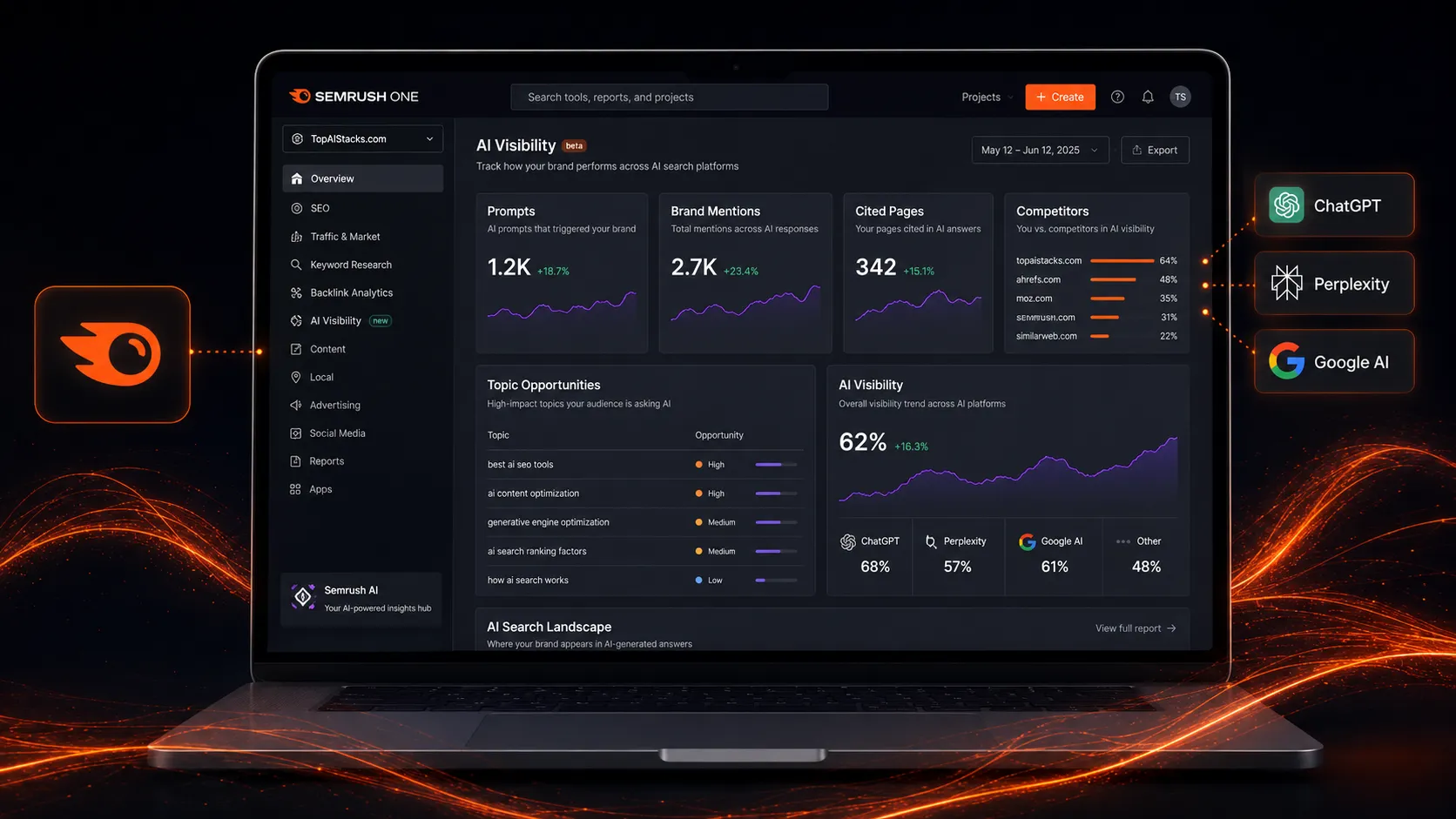
Semrush sits near the research and measurement center of an AI SEO stack. It helps decide what to target, which competitors matter, what technical issues block growth, and how visibility changes over time. It should feed briefs, editorial planning, audits, and reporting rather than replace strategy or publishing judgment.
Stack role
SEO research and search intelligence layer
Best paired with
Google Search Console, Google Analytics, Screaming Frog
Strongest layer
Keyword research + Competitor intelligence + Technical SEO audit
| Stack layer | Fit | What to know |
|---|---|---|
| Keyword research | strong | Strong for discovering, filtering, comparing, and prioritizing search opportunities. |
| Competitor intelligence | strong | Strong for domain research, keyword gaps, backlink gaps, and market comparison. |
| Technical SEO audit | strong | Useful for finding site health issues, though complex fixes still need expert review. |
| Content briefing | medium | Helpful for research and topic planning, but dedicated content optimizers may feel lighter for writers. |
| AI visibility monitoring | medium | Relevant through Semrush One and AI visibility paths, but buyers should verify exact plan access. |
| Publishing execution | weak | Semrush informs what to publish or fix, but it is not the CMS or production workflow itself. |
Best stack combinations
Affiliate content team
Semrush + Google Search Console + ChatGPT + WordPress
Use Semrush for keyword and competitor research, Search Console for reality checks, ChatGPT for drafting support, and WordPress for publishing.
SEO agency
Semrush + Screaming Frog + Google Analytics + Looker Studio
Combine Semrush research and tracking with deeper crawling, analytics validation, and client-facing reporting dashboards.
Content optimization team
Semrush + Surfer SEO + Claude + Google Docs
Let Semrush guide topics and competitors, then use optimization and writing tools to produce clearer briefs and edited drafts.
What Semrush can replace
- · Manual keyword spreadsheets
- · Basic competitor SERP checks
- · Separate rank tracking tools for small teams
- · Ad hoc backlink spot checks
What it still needs
- · Google Search Console: Validate real query, indexing, and click data from your own site
- · Analytics platform: Connect SEO work to sessions, conversions, and revenue outcomes
- · CMS or publishing workflow: Turn research into updated pages, articles, and internal links
- · Human SEO judgment: Prioritize opportunities and avoid chasing every metric blindly
Add it to your stack if
- · SEO is a primary traffic or revenue channel
- · You need competitor, keyword, backlink, audit, and tracking data in one place
- · Your team manages multiple sites, clients, or content clusters
- · AI-search visibility is becoming part of your reporting
Skip it if
- · You only need occasional keyword ideas
- · Your budget cannot support a premium SEO platform
- · You need a simple content editor more than a full SEO intelligence suite
- · You are not ready to act on technical or competitive research
Choose your next step
Pricing
→Compare Semrush plan paths, limits, trial options, and what to verify before choosing a plan.
Alternatives
→Compare Semrush with other SEO suites, content optimizers, and research tools by buyer job.
Compare options
→Compare Semrush with Ahrefs for keyword research, backlink analysis, audits, and reporting.
Stack fit
→See where Semrush fits with analytics, content optimization, writing, and publishing tools.
Review
→Read the full Semrush editorial review when the review page is available.
Pricing summary
This is a profile-level summary. Use the pricing page for deeper plan checks.
Starting path
Free tools/trial plus paid SEO plans
Free plan
Yes
Free trial
7 days
Semrush has free tools and a 7-day trial path, but serious SEO campaign work usually requires a paid plan. Official Semrush SEO Toolkit documentation lists Pro, Guru, and Business monthly plan prices, while the main pricing page also promotes Semrush One and AI visibility bundles. Buyers should confirm the exact product line, billing period, limits, and add-ons at checkout.
Best starting path: Pro can work for focused SEO research on a smaller site. Guru or Business is more realistic for agencies, content-heavy workflows, historical data, higher limits, or API and reporting needs.
Related stack page
Top alternatives
See all →Direct alternatives
Related comparisons
FAQ
Is Semrush mainly an SEO tool or an AI tool?
Semrush is primarily an SEO and digital marketing intelligence platform, with newer AI-assisted and AI-visibility features layered into the workflow. Treat it as the research, audit, tracking, and reporting layer of an SEO stack, not as a general-purpose AI writing assistant.
Does Semrush have a free plan?
Semrush offers free tools, limited access, and a trial path, but serious SEO work usually requires a paid plan. The free path is useful for evaluation and quick checks, while campaign planning, tracking, and agency workflows typically need paid limits.
Does Semrush offer a free trial?
Semrush currently promotes a 7-day free trial path on its official pricing experience. Buyers should verify the trial terms, eligible products, cancellation language, and regional checkout conditions before starting the trial.
Who should choose Semrush over Ahrefs?
Choose Semrush when you want a broader SEO and marketing workspace with keyword research, site audits, competitor research, reporting, content workflows, and AI visibility options. Choose Ahrefs when backlink analysis and a simpler SEO research workflow are the main priorities.
Is Semrush worth it for a small affiliate site?
It can be worth it if the site is actively publishing, updating content, and using SEO as a serious revenue channel. If you only need occasional keyword ideas, a cheaper SEO tool or a short trial window may be a safer first step.
What should buyers verify before paying for Semrush?
Verify the product line, plan price, project limits, keyword tracking limits, crawl limits, report limits, extra user costs, AI visibility access, add-ons, and cancellation terms. These details matter because Semrush can become more expensive as team and reporting needs grow.
How TopAIStacks evaluates Semrush
Evaluated Semrush as an SEO stack layer by checking official positioning, pricing clarity, setup difficulty, alternatives, workflow fit, stack role, and the recurring buyer problem of choosing between a broad SEO intelligence suite and narrower content or backlink tools.
Last checked: May 2026 · Source confidence: high